InfoQ Live Logo

The Software Architects' Newsletter
March 2026
View in browser

Welcome to the InfoQ Software Architects' Newsletter! We bring you essential news and experience on emerging patterns and technologies from industry peers each month.

This month, we focus on "Architecture Through Different Lenses". Technologies, patterns, and practices from this topic span the entire "diffusion of innovation" graph in last year's "InfoQ Software Architecture and Design Trends Report".

This newsletter theme explores software architecture through multiple lenses, including technical, organizational, human, economic, and operational. From sociotechnical systems to developer experience, governance, and AI-augmented design, it examines how different perspectives shape architectural decisions and long-term outcomes. Understanding these lenses helps architects reason more clearly about trade-offs, constraints, and changes at scale.

News

QCon London 2026: Kleppmann on Mitigating Europe's Cloud Dependency with Local-First Software

On the second day of QCon London 2026, Martin Kleppmann opened his keynote with a graph, not of system throughput or latency, but of European cloud market share. AWS, Azure, and Google Cloud together hold roughly seventy percent of the European market. The largest European cloud providers account for about two percent each.

Kleppmann, an Associate Professor at the University of Cambridge and author of Designing Data-Intensive Applications (the second edition, co-authored with Chris Riccomini, is being released this month), spent the next fifty minutes making the case that this dependency is a risk worth engineering against not with panic, yet with practical technological choices that shift power back toward users and away from single providers.

QCon London 2026: Morgan Stanley Rethinks Its API Program for the MCP Era

At QCon London 2026, Jim Gough and Andreea Niculcea from Morgan Stanley showed what happens when a large financial institution migrates its API estate to be AI agent-ready. The pair has spent five years building Morgan Stanley's API program, and over the last year, they've had to rethink significant parts of it. The catalyst was the Model Context Protocol (MCP), which has gone from obscurity to industry standard in roughly eighteen months, fundamentally changing who, or what, is consuming your APIs.

The recording of Gough's QCon London 2025 talk is now also available on InfoQ: Platforms for Secure API Connectivity with Architecture as Code.

Platform Engineering as a Practice of Sociotechnical Excellence

Lesley Cordero discusses platform engineering as a practice for driving sociotechnical change and organizational sustainability. She explains the "pendulum of tension" between developer experience and reliability, emphasizing that architectural patterns must solve for organizational complexity. She also shares a leadership framework for moving from reactive heroism to proactive stewardship.

Spec-Driven Development – Adoption at Enterprise Scale

In a recent InfoQ article, Hari Krishnan argues that while Spec-Driven Development (SDD) helps engineer context effectively, current SDD tools have several gaps that need to be understood when used at an enterprise scale.

In the short term, SDD adoption requires integration with existing workflows, support for brownfield projects (existing codebases without specifications), and the ability to enable sophisticated techniques incrementally. Over the long term, engineers need to develop an intuitive understanding of how to use SDD tools effectively. This understanding includes managing context effectively to avoid being overwhelmed by additional feedback loops and validation.

Software Evolution with Microservices and LLMs: A Conversation with Chris Richardson

In this recent podcast, Michael Stiefel spoke with Chris Richardson about using microservices to modernize software applications and the use of artificial intelligence in software architecture.

They first explored the problems of monolithic enterprise software and how to use microservices to evolve them to enable fast flow. Then the discussion focused on the challenges of using generative artificial intelligence to understand an existing codebase, as well as the usefulness of artificial intelligence in system architecture.

For readers interested in the leadership aspects of AI adoption, a recent InfoQ podcast from Sam McAfee and Thomas Betts is also available, "Mindful Leadership in the Age of AI".

Case Study

The Oil and Water Moment in AI Architecture

In The Oil and Water Moment in AI Architecture, Shweta Vohra articulates a tension many architects are already encountering: Deterministic systems and probabilistic AI do not naturally coexist.

Traditional software is built on predictability, where the same input produces the same output. This predictability permits testing, debugging, and clear guarantees. AI systems, particularly those powered by LLMs, break this model. Their outputs are inherently variable, shaped by probabilities rather than fixed logic. The result is an "oil and water" moment, where two fundamentally different behaviors must operate within a single architecture.

The implication is a shift in design mindset. We are no longer engineering purely for correctness, but for bounded uncertainty. This shift defines acceptable outcomes rather than exact ones, and introduces guardrails such as validation layers, human-in-the-loop checks, and deterministic fallbacks when confidence is low.

Observability also evolves, with latency and error rates that are no longer sufficient. Architects must track output quality, drift, and alignment with user intent. In practice, tracking pushes teams toward tighter feedback loops and more continuous evaluation, closer to managing a sociotechnical system than a traditional service.

A pragmatic pattern is emerging. Rather than embedding AI deep within critical paths, teams encapsulate it behind well-defined interfaces. This approach helps contain unpredictability while still enabling high-value use cases such as summarization, recommendation, and decision support.

The takeaway is clear: AI is not just another component. It introduces a different operational model, and architects who succeed will embrace probabilistic thinking, design for uncertainty, and treat AI as a constrained collaborator rather than a deterministic service.

This content is a short summary of a recent InfoQ article by Shweta Vohra, "The Oil and Water Moment in AI Architecture".

To get notifications when InfoQ publishes content on these topics, follow "architecture and design", "sociotechnical architecture", and "culture and methods" on InfoQ.

Missed a newsletter? You can find all of the previous issues on InfoQ.

Sponsored

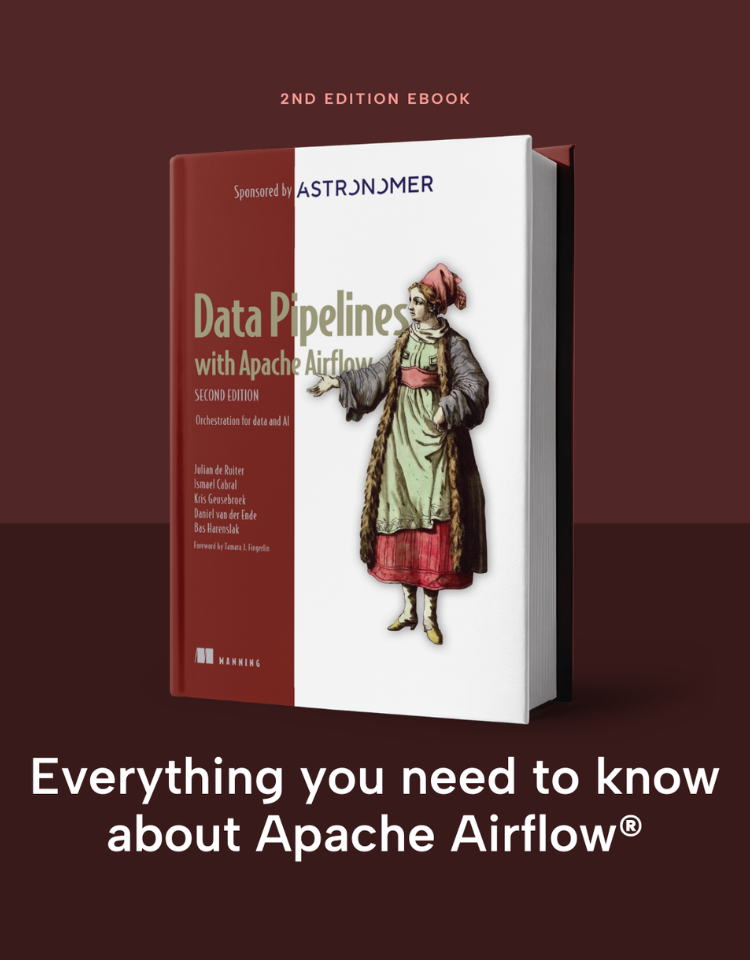
The only guide to Airflow you need - Sponsored by Astronomer

Struggling with brittle, hard-to-debug data pipelines and inconsistent orchestration across your stack? Learn how to design, build, and operate reliable workflows with Apache Airflow. This comprehensive eBook walks through DAG design, scheduling, testing, and production best practices—equipping architects to standardize data pipelines, improve observability, and scale data-driven systems with confidence.

Download "Data Pipelines with Apache Airflow (By Manning)", sponsored by Astronomer

Upcoming Events

About InfoQ

Senior software developers rely on the InfoQ community to keep ahead of the adoption curve. One of the main reasons software architects and engineers tell us they keep coming back to InfoQ is because they trust the information provided and selected by their peers.

We've been helping software development teams adopt new technologies and practices for over 20 years through InfoQ articles, news items, podcasts, tech talks, trends reports, and QCon software development conferences.

We hope you find this newsletter useful. If not, you can unsubscribe using the link below.

Unsubscribe

Forwarded email? Subscribe and get your own copy.

Subscribe

Follow InfoQ on:

You have received this email because you subscribed to "The Architects' Newsletter". To stop receiving the Architects' Newsletter, please click the following link: Unsubscribe

- - -

C4Media Inc. (InfoQ.com), 705-2267 Lake Shore Blvd. West,
Toronto, Ontario, Canada, M8V 3X2