InfoQ Live Logo

The Software Architects' Newsletter
June 2026
View in browser

Welcome to the InfoQ Software Architects' Newsletter! We bring you essential news and experience on emerging patterns and technologies from industry peers each month.

This month, we focus on "AI Trends: The Next Evolution of Software Tooling, Techniques, and Teams". Technologies, patterns, and practices from this topic span the entire "diffusion of innovation" graph in last year's "InfoQ Software Architecture and Design Trends Report".

From AI-augmented development workflows and evolving system design patterns to shifts in team structure, governance, and developer experience, we examine how architects are adapting to a rapidly changing landscape. As AI moves from experimentation to everyday practice, understanding its impact on socio-technical systems, decision-making, and long-term system evolution is becoming a core architectural concern.

News

AI Agents to Make Sense of Data at OpenAI

OpenAI's Bonnie Xu discusses Kepler, an internal AI data analyst agent built to query over six hundred petabytes of data. She explains how they overcome context window limits using MCP, automated code crawling, and RAG. Xu also shares how their team leverages scoped semantic memory for self-learning and utilizes AST-based LLM grading to build a robust, regression-free evaluation pipeline.

AI Coding Agents Get a Stack Overflow of Their Own

Early this month, the Stack Overflow team announced Stack Overflow for Agents, a beta API-first knowledge exchange aimed at AI coding agents rather than human developers. Stack Overflow is trying to close what they call the "Ephemeral Intelligence Gap", where agents repeatedly rediscover the same fixes and patterns in isolation instead of sharing them through a common memory.

Automating the Web With MCP: Infra That Doesn't Break

Paul Klein discusses the distributed-systems challenges of scaling cloud-hosted browser infrastructure for AI agents. He explains how to manage bursty, stateful multi-tenancy and secure Chromium environments against remote code execution using Firecracker. He also shares how to leverage the Model Context Protocol (MCP) to turn complex websites into accessible agentic tools.

Gemma 4 12B Enables On-Device, Multimodal Agentic Workflows with an Encoder-Free Architecture

Google says that Gemma 4 12B is "designed to bring agentic, multimodal intelligence directly to your laptop", further noting that the new model can be combined with Google AI Edge to "build and experiment locally, on everyday machines". This integration enables a wide range of capabilities, from autonomous data processing to generating visual insights and even building webpages or running tools.

Beyond Prompting: Context Engineering and Memory Management for AI Systems at Scale

Adi Polak discusses the architecture required to transition prompts from being stateless to state-aware, context-rich AI agents. Drawing on fifteen years in distributed systems, she shares how engineering leaders can leverage Apache Kafka and Flink for real-time stream processing, dynamic memory tiering, and tool orchestration via MCP to solve token limits, cost spikes, and latency bottlenecks.

Earlier in the year, Polak sat down with Thomas Betts on the InfoQ podcast to discuss the need for context engineering when interacting with LLMs and designing agentic systems.

Dropbox Introduces Nova, an Internal Platform for Running AI Coding Agents at Scale

Dropbox has unveiled Nova, an internal platform designed to orchestrate and operationalize AI coding agents across the company's engineering workflows. Rather than treating AI assistants as standalone coding tools, Nova provides a centralized execution layer that allows agents to operate within Dropbox's monorepo, continuous integration (CI) systems, observability tooling, and infrastructure workflows, enabling AI systems to participate in everything from flaky test remediation to dependency migrations and production incident investigation.

The Technology Adoption Curve, Twenty Years On

On June 8th, InfoQ celebrated its 20th anniversary, and the team is still documenting the diffusion of innovation throughout the software delivery industry. The concepts of innovators, early adopters, early majority, late majority, and laggards remain on the About page because they remain central to InfoQ's editorial approach. It continues to guide our coverage and trends reports, helping map emerging technologies and practices against the technology adoption curve.

The curve is most active right now on AI engineering and agentic systems, and it is where InfoQ readers spend the most time. Within this broader shift, several distinct sub-threads stand out, such as context engineering and spec-driven development, AI-native development patterns, and the reliability story for AI systems. Production AI is producing a new category of incidents and a new conversation about what reliability even means when the system is non-deterministic by design.

Case Study

Governing AI in the Cloud: A Practical Guide for Architects

As organizations rapidly adopt generative AI, many are discovering they already have a governance problem. In "Governing AI in the Cloud: A Practical Guide for Architects", Dave Ward argues that "Shadow AI", which is the use of unapproved AI tools, plugins, copilots, and experimental applications, has quietly expanded enterprise attack surfaces and introduced new data governance risks. The challenge for architects is not whether AI is being used, but how to regain visibility and control without stifling innovation.

Ward recommends starting with discovery. Organizations should inventory AI usage across their environments using observability tools, cloud access security brokers (CASBs), service mesh telemetry, and API monitoring. However, visibility alone is insufficient. Effective governance requires enforcement mechanisms embedded within the platform itself, enabling organizations to understand not only where AI services are being used, but also what data is flowing into them.

A central recommendation is to classify data at the time of creation rather than attempt to retrofit controls later. By integrating data classification with identity and access management (IAM), architects can ensure that sensitive information is automatically governed before reaching AI services. Policy-as-code approaches, including tools such as Open Policy Agent (OPA), then provide a scalable mechanism for enforcing organizational rules consistently across cloud environments.

The article also emphasizes that governance is fundamentally an organizational challenge. Success depends on aligning security, engineering, product, and platform teams around clear ownership models and automated workflows. Manual approval processes rarely scale; instead, governance should be treated as a platform capability that combines discovery, classification, policy enforcement, and observability. For architects, the key takeaway is that AI governance must become part of the software delivery and cloud operating model, rather than a separate compliance exercise.

This content is a short summary of a recent InfoQ article by Dave Ward, "Governing AI in the Cloud: A Practical Guide for Architects", which is part of the "Securing the AI Stack: from Model to Production" article series.

To get notifications when InfoQ publishes content on these topics, follow "AI, ML & Data Engineering", "architecture and design", and "Artificial Intelligence" on InfoQ.


InfoQ Online Certification Programs covering AI Engineering, AI Security, and Architecture

A lot of this month's reading comes down to a decision you have to make and defend, whether that's how to govern AI in production, when to move an agent from prototype to production, or how AI changes the architecture you commit to.

InfoQ's Online Certification Program cohorts give senior engineers and architects a peer group from other companies with which to work through those kinds of decisions, facilitated by senior practitioners.

Upcoming cohorts include:

  • AI Engineering with Hien Luu, author of MLOps with Ray and QCon program committee chair. RAG and context pipelines, agents, evals, and reliability for production AI systems. Starts July 25, 2026, Saturdays 9:00 PDT.
  • AI Security & Privacy Engineering with Katharine Jarmul, author of O'Reilly's Practical Data Privacy. Sensitive data handling, threat modeling and red teaming, controls and sandboxes, governance and auditing. Starts August 26, 2026, Wednesdays 2:00 PM CEST.
  • Architecture with Luca Mezzalira, Principal Solutions Architect. The sociotechnical side of architecture. Trade-offs and communication, decentralized decision-making, platform engineering, and the AI architecture decisions you're now being asked to own. Three intakes are open, starting August 13, September 14, and October 16.

Each certification cohort ends with a capstone article, the best of which gets published on InfoQ. See all cohorts and dates.

Live online sessions, four hours a week over five weeks. $1,470 per cohort.

Missed a newsletter? You can find all of the previous issues on InfoQ.

Sponsored

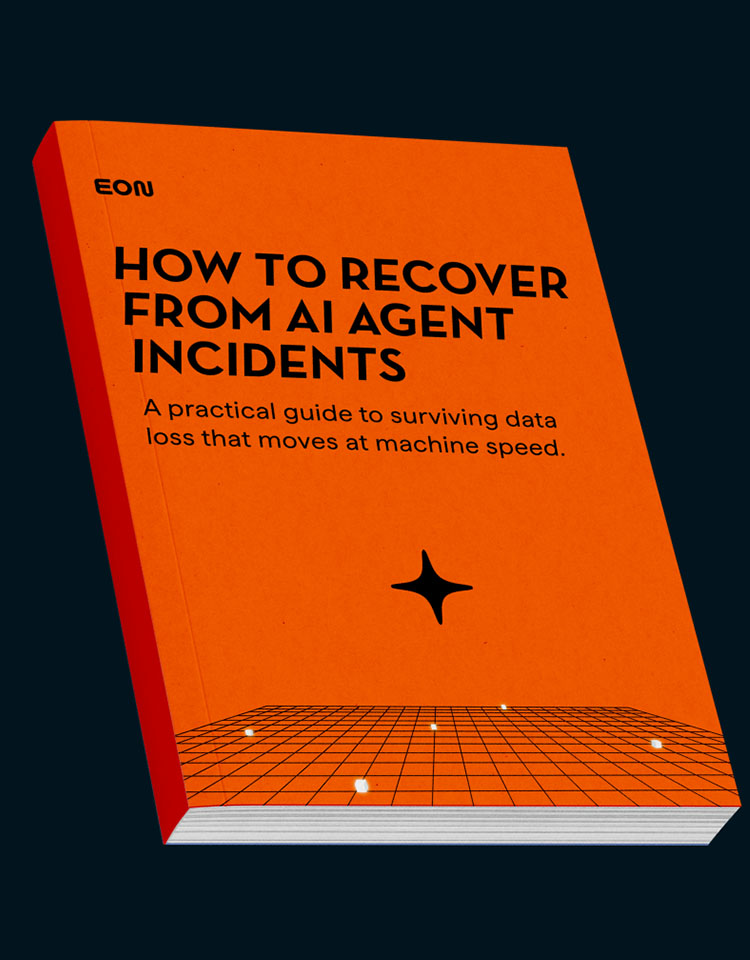
When an AI Agent Deletes Production Data, What Do You Restore To? - Sponsored by Eon

AI agents are increasingly operating in production environments with valid credentials and machine-speed autonomy, creating new recovery challenges for cloud and platform teams. This practical guide explores how AI-driven mistakes and attacks can lead to data loss, why traditional backup approaches often fail, and how to detect and recover from incidents more effectively. Learn six actionable checks to identify recovery gaps, scope restores precisely, and build resilience before an AI-driven incident becomes a postmortem.

Read “Report: How to Recover from AI Agent Incidents”, sponsored by Eon

Upcoming Events

About InfoQ

Senior software developers rely on the InfoQ community to keep ahead of the adoption curve. One of the main reasons software architects and engineers tell us they keep coming back to InfoQ is because they trust the information provided and selected by their peers.

We’ve been helping software development teams adopt new technologies and practices for over 20 years through InfoQ articles, news items, podcasts, tech talks, trends reports, and QCon software development conferences.

We hope you find this newsletter useful. If not, you can unsubscribe using the link below.

Unsubscribe

Forwarded email? Subscribe and get your own copy.

Subscribe

Follow InfoQ on:

You have received this email because you subscribed to "The Architects' Newsletter". To stop receiving the Architects' Newsletter, please click the following link: Unsubscribe

- - -

C4Media Inc. (InfoQ.com), 705-2267 Lake Shore Blvd. West,
Toronto, Ontario, Canada, M8V 3X2