|
Case Study
|
|
From Reusable to Regeneratable: Rethinking the Shared UI Component Library
|
In From Reusable to Regeneratable: Rethinking the Shared UI Component Library, Daniel Curtis, Head of Engineering at Griffiths Waite, challenges the conventional wisdom that organizations should maintain centralized UI component libraries. He argues that generative AI is fundamentally changing the economics of software reuse, making it increasingly practical to regenerate components on demand rather than maintain shared, versioned packages.
Traditionally, component libraries have provided four benefits: reuse, consistency, encoded expertise, and a single source of truth. However, maintaining these libraries introduces significant overhead, including dependency management, versioning, cross-team coordination, and ongoing support. As AI-assisted development lowers the cost of generating code, Curtis suggests organizations reconsider which elements genuinely require centralization.
The proposed alternative is to centralize design systems, design tokens, engineering principles, and machine-readable guidelines while allowing individual teams to generate components tailored to their applications. Curtis describes how Griffiths Waite is already experimenting with this approach, combining the Figma Model Context Protocol (MCP) server with engineering guidelines to generate UI components aligned with organizational standards. Automated verification, including visual regression testing, accessibility checks, and token conformance, is essential for ensuring consistency and quality.
However, Curtis acknowledges that regeneration is not appropriate for every component. Complex widgets, accessibility-sensitive controls, and components requiring consistent behavior across applications may still benefit from centrally maintained, human-audited implementations. He also highlights the risk of AI-generated interfaces converging towards generic designs, reinforcing the importance of distinctive, opinionated design systems.
The central architectural takeaway is that reuse should increasingly focus on shared specifications, constraints, and verification rather than shared implementations. By separating design governance from component delivery, organizations can potentially reduce maintenance overhead while giving teams greater autonomy to evolve their applications independently.
This content is a short summary of a recent InfoQ article by Daniel Curtis, "From Reusable to Regeneratable: Rethinking the Shared UI Component Library".
To get notifications when InfoQ publishes content
on these topics, follow "Architecture and Design", "Development", and "Design Patterns" on InfoQ.
|
|
Work Through Architecture Decisions with Senior Peers
|
The InfoQ Online Certification Programs bring senior engineers and architects from different companies together to work through decisions from their own projects. With a senior practitioner and peer group, you’ll apply frameworks from QCon talks, compare the constraints behind different approaches, and discuss what happened when you tried them.
Each cohort runs live online for five weeks, with four hours of facilitated sessions and up to two hours of independent work each week. Sessions aren't recorded, so you can discuss current work in confidence.
Upcoming cohorts include:
- AI Engineering with Adi Polak · November 12, 2026. Adi, author of Scaling Machine Learning with Spark, has spent more than a decade working with data and machine learning. Examine context pipelines, retrieval and memory, agent orchestration, and platform choices, drawing on her work with machine learning and real-time streaming systems.
- AI Engineering with Lan Chu · November 13, 2026. Lan is a Principal Engineer building production AI systems. Her team's RAG experience provides a concrete case study for examining data processing and retrieval failures, alongside decisions about agent design, platforms, and evaluations.
- High-Performing Teams with Olimpiu Pop · November 17, 2026. Olimpiu brings 20 years of experience across architecture and engineering leadership. Examine team design, delivery flow, AI responsibilities, engineering metrics, and operating models.
- AI Engineering with Hien Luu · January 9, 2027. Hien, author of MLOps with Ray and Beginning Apache Spark 3, specializes in scalable AI/ML infrastructure. Work through RAG architecture, agent design, inference infrastructure, and the evaluations and operational practices behind reliable AI systems.
- Architecture with Luca Mezzalira · January 22, 2027. Luca is a principal solutions architect with more than 20 years of experience spanning frontend and cloud architecture. Work through decentralized decision-making, platform engineering, and AI architecture trade-offs.
Review upcoming cohorts.
|
Missed a newsletter? You can find all of the
previous issues
on InfoQ.
|
|
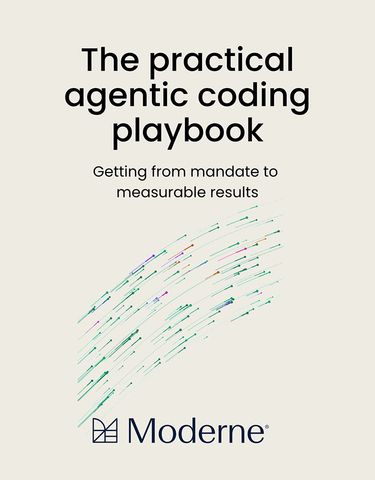
PRs merged are up 98%, but PR review time has surged 441%. Developer speed isn’t translating into shipping speed, putting AI ROI at risk. This playbook helps engineering leaders close the gap, from preparing codebases for AI agents to governing agentic systems at scale. Discover how to identify bottlenecks, assess technical debt and agent efficiency, and measure what matters, including cost per outcome and tokens per shipped change. Explore actionable strategies to turn AI-assisted development gains into measurable business outcomes.
Download the guide “The Practical Agentic Coding Playbook,” sponsored by Moderne
|
|
|
|
|
About InfoQ
|
Senior software developers rely on the InfoQ
community to keep ahead of the adoption curve. One
of the main reasons software architects and
engineers tell us they keep coming back to InfoQ
is because they trust the information provided and
selected by their peers.
We've been helping software development teams
adopt new technologies and practices for over 20
years through InfoQ articles, news items,
podcasts, tech talks, trends reports, and QCon
software development conferences.
We hope you find this newsletter useful. If not,
you can unsubscribe using the link below.
|
|
|
|
Forwarded email? Subscribe and get your own copy.
|
|
|
|
You have received this email because you
subscribed to "The Architects' Newsletter". To
stop receiving the Architects' Newsletter, please
click the following link:
Unsubscribe
- - -
C4Media Inc. (InfoQ.com), 705-2267 Lake Shore
Blvd. West,
Toronto, Ontario, Canada, M8V 3X2
|
|
|