InfoQ Live Logo

The Software Architects' Newsletter
August 2025
View in browser

Welcome to the InfoQ Software Architects' Newsletter! We bring you essential news and experience on emerging patterns and technologies from industry peers each month.

This month, we focus on "Architecting for Complexity: Socio-Technical Systems at Scale". Technologies, patterns, and practices from this topic span the entire "diffusion of innovation" graph in our InfoQ Trends Reports 2024 eMag, InfoQ Software Architecture and Design Trends Report 2025 (and accompanying podcast), and InfoQ Culture and Methods Trends Report 2025 (and accompanying podcast).

This newsletter will focus on architectural patterns that support alignment across distributed teams, how to balance autonomy with consistency, and the role of systems thinking in shaping resilient, adaptive organizations. Whether you're tackling platform sprawl, orchestrating multiple microservices teams, or introducing AI-driven workflows, understanding the human dimension of architecture is key to building systems that scale sustainably.

News

The European Cloud Dilemma: Innovation Versus Digital Sovereignty

European tech companies are facing a tricky situation, using popular American cloud services like AWS and Google Cloud, but worrying about keeping control of their data in Europe. With rising geopolitical tensions, more practitioners are asking: Should we be less dependent on American tech giants? It has prompted some European developers and businesses to rethink how they handle their data and build their systems.

Ahead of the InfoQ Dev Summit in Munich, Markus Ostertag, Elena van Engelen-Maslova, Erik Steiger, and Katharine Jarmul discussed the topic in a recent "Sovereign Clouds, Hyperscalers and European Alternatives" podcast.

How NASA Tests Their Software for the Space Shuttle and the Orion MPCV

NASA employs multiple testing levels, independent validation, established standards, safety communities, and tools to ensure safety. Darrel Raines delivered a talk on software development and testing for the Space Shuttle and the Orion MPCV at NDC Tech Town. He explained how they learn from failures and near misses, continually improving their process.

Supply Chain Security: Provenance Tools Becoming Standard in Developer Platforms

Software provenance is gaining new importance as organizations look for ways to secure their supply chains against tampering and comply with emerging standards like Supply-chain Levels for Software Artifacts (SLSA). In a recent blog post, HashiCorp highlighted how its HCP Packer service captures build metadata and SBOMs to support SLSA Level 1 compliance.

Advanced Message Queuing Politics

John O'Hara shares the compelling eighteen-year saga of the Advanced Message Queuing Protocol (AMQP), detailing its evolution from a JPMorgan business problem to an international ISO standard. He explains the technical and political challenges, emphasizing the critical role of open standards in preventing vendor lock-in and fostering robust, universal messaging solutions.

Levelling Yourself Up as a Software Engineer While Climbing through the Ranks

Suhail Patel, in his QCon London talk about growing oneself as a software engineer, explained that as software engineers grow into senior, staff+, or principal roles, they take on greater responsibility, more complex projects, and influence beyond code. Growth isn't linear; it requires mastering communication, strategy, and the art of soft influence. Writing, speaking, and one-on-ones can help to expand impact.

In a related InfoQ podcast, Thiago Ghisi discussed building engineering culture through leading by example, advancing careers by embracing "glue work" (non-technical but necessary tasks), taking full ownership of projects, and developing self-awareness to choose between technical and management career paths.

How Figma Uses AI to Support, Not Replace, the Designer

Figma has integrated AI across its design platform, from small tools like auto-naming layers to Figma Make, which can turn a text prompt, image, or design frame into production-ready code that teams can edit together in real time. The result: prototypes that can be built by non-technical staff in hours, and in some cases code precise enough for engineers to move straight into production, all while ensuring the designer stays in control of the final output.

Case Study

From Legacy to Value: Building Digital Banking Products AcrossCentral and Eastern Europe

In the full-length edition of this InfoQ article by Lejla Vulovic and Ana Nadwill, they share practical experiences and provide concrete examples from their work with multi-site teams that built a digital banking solution and delivered value to customers across various European markets.

Their banking group, headquartered in Vienna, operates in eleven Central and Eastern European (CEE) markets and serves approximately eighteen million customers. They aim to bring real-life stories and lessons learned from developing two banking products, Lending and Foreign Exchange (FX), and their evolving architecture over time.

In building a banking solution that spanned multiple countries, the team adopted a collaboration model grounded in Conway's Law, which helped them optimize for faster customer value delivery while avoiding the duplication of local solutions. By defining common goals early and ensuring they were well understood across markets, the teams could align architectural adaptations with business priorities and proactively manage risks and dependencies.

The approach relied on continuously evolving communication structures, IT architecture, and organizational design, enabling the delivery of unified, scalable digital solutions. Agility and modern engineering practices were reinforced through ongoing education, the involvement of agile coaches at both team and leadership levels, and the co-creation of collaboration agreements.

Finally, shared activities such as group roadmapping and retrospectives fostered a "one-team" mindset, improving cross-country collaboration and enhancing agile practices across the organization.

This content is an excerpt from a recent InfoQ article by Lejla Vulovic and Ana Nad, "From Legacy to Value: Building Digital Banking Products across Central and Eastern Europe"

To get notifications when InfoQ publishes content on these topics, follow "Architecture & Design", "Culture and Methods", and "Sociotechnical Architecture" on InfoQ.

Missed a newsletter? You can find all of the previous issues on InfoQ.

Sponsored

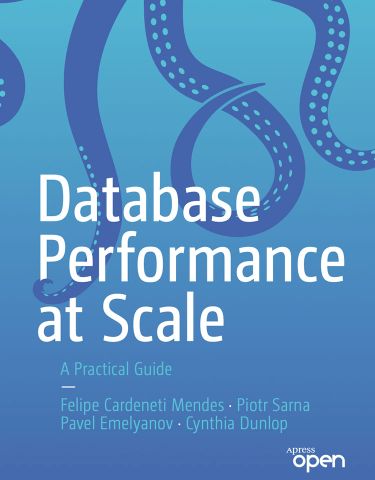
Architectural Guide to Database Performance at Scale - Sponsored by ScyllaDB

Database performance is often won or lost at the architectural level. This book distills lessons learned from thousands of teams to help you navigate the real-world trade-offs, opportunities, and pitfalls of optimizing data-intensive systems. Learn how to evaluate database architectures for throughput and latency, recognize hidden scalability challenges, avoid common missteps that limit agility, and equip your team with proven practices for building systems that scale reliably under demand.

Download the eBook “Database Performance at Scale: A Practical Guide,” sponsored by ScyllaDB

Upcoming Events

InfoQ and QCon: For practitioners, by practitioners

InfoQ Dev Summit Munich 2025 (October 15–16):

Master modern software development.
See the full schedule and register today.


QCon San Francisco 2025 (November 17–21):

Explore emerging trends ready for enterprise adoption.
See the tracks and confirmed speakers.


QCon AI New York 2025 (December 16–17):

Accelerate the entire software lifecycle with AI.
Find out more to lead your team's AI journey.


QCon London 2026 (March 16-19):

Lead the change in software development.
Explore the provisional tracks and register today.

About InfoQ

Senior software developers rely on the InfoQ community to keep ahead of the adoption curve. One of the main reasons software architects and engineers tell us they keep coming back to InfoQ is because they trust the information provided and selected by their peers.

We've been helping software development teams adopt new technologies and practices for over 19 years through InfoQ articles, news items, podcasts, tech talks, trends reports, and QCon software development conferences.

We hope you find this newsletter useful. If not, you can unsubscribe using the link below.

Unsubscribe

Forwarded email? Subscribe and get your own copy.

Subscribe

Follow InfoQ on:

You have received this email because you subscribed to "The Architects' Newsletter". To stop receiving the Architects' Newsletter, please click the following link: Unsubscribe

- - -

C4Media Inc. (InfoQ.com), 705-2267 Lake Shore Blvd. West,
Toronto, Ontario, Canada, M8V 3X2