InfoQ Live Logo

The Software Architects' Newsletter
October 2025
View in browser

Welcome to the InfoQ Software Architects' Newsletter! We bring you essential news and experience on emerging patterns and technologies from industry peers each month.

This month, we focus on "Platform Engineering and Architecture". Technologies, patterns, and practices from this topic span the entire "diffusion of innovation" graph in our recently published InfoQ Cloud and DevOps Trends Report - 2025 (and accompanying podcast).

This newsletter will focus on architectural patterns for building internal developer platforms that prioritize speed, safety, and efficiency. Whether you're tackling platform sprawl, orchestrating multiple platform teams, or introducing AI-driven workflows into your platforms, understanding the impact of architecture is key to building systems that scale sustainably.

News

HashiCorp Warns Traditional Secret Scanning Tools are Falling behind

HashiCorp has warned that traditional secret-scanning tools are failing to keep pace with the realities of modern software development. In a new blog post, the company argues that current approaches, often reliant on post-commit detection and brittle pattern matching, leave dangerous gaps in coverage.

It calls for organizations to focus on prevention-first strategies that integrate directly into developer tools, CI/CD pipelines, and incident response systems to reduce exposure windows and improve remediation speed. The warning follows a string of high-profile credential exposure incidents in recent years, highlighting how even mature organizations can be vulnerable.

Pulumi Launches Neo: an Agentic AI Platform Engineer for Multi-Cloud Infrastructure

Infrastructure automation company Pulumi has introduced what it claims is the industry's first artificial intelligence-based platform engineering agent, named Neo. The tool helps resolve some of the infrastructure bottlenecks that arise as a side effect of AI tools speeding up software development.

In a press release, Pulumi explains that the speed of platform engineering teams has become challenging to sustain due to advances in AI coding assistants that have accelerated software development. According to Pulumi's founder and CEO, Joe Duffy, AI has completely transformed application development methods over the past twelve months. The company has identified a "velocity trap": When AI tools enhance developer efficiency, platform teams fail to keep pace.

DevGreenOps: How to Design Sustainable Digital Services

DevGreenOps, also known as DevSusOps, is an extension of the DevOps approach, in which environmental sustainability considerations are integrated into every step of the DevOps cycle, Jochen Joswig said in his OOP Conference talk. Applying transparency, minimalism, efficiency, and awareness helps us to design sustainable digital services.

The promise of DevGreenOps is that it will bring all the benefits of DevOps while also reducing the environmental impact of software, for example, by reducing the energy, water, and other resource use at every stage of the software’s life cycle, Joswig said.

Continuous Deployment and Pair Programming for Lean Software Delivery Even without Jira

Asgaut Mjølne Söderbom and Ola Hast, two developers with SpareBank 1, speak to Olimpiu Pop about their journey towards continuous deployment and pair programming.

They argue that pair or mob programming, coupled with trunk-based development, is a key ingredient for continuous delivery (CD). These practices involve deploying to production several times per day without the overhead of asynchronous code reviews. The code quality is also significantly higher, and no time is wasted waiting on others.

AWS CDK Refactor Feature: Safe Infrastructure as Code Renaming

AWS recently announced a new AWS Cloud Development Kit (CDK) feature that enables cloud engineers to refactor their Infrastructure as Code (IaC), preserving resources when renaming constructs and reorganizing applications.

While the AWS CDK provides a means to refactor, other IaC tools handle similar tasks differently. For instance, Pulumi relies on the concept of aliases, which are explicit properties cloud engineers can add to a resource definition to tell Pulumi to update an existing resource's identity rather than replacing it. Terraform has a more manual, declarative method using the moved block, which cloud engineers add to their HCL configuration to explicitly map an old resource address to a new one, ensuring the state file is updated without destroying the underlying resource.

Case Study

Backend FinOps: Engineering Cost-Efficient Microservices in the Cloud

Cloud-native microservices have transformed backend engineering, preparing organizations to scale rapidly, deliver frequent updates, and maintain system resilience. However, this flexibility often brings significant challenges in managing operational costs. Unexpected cloud expenditures frequently result from fragmented resource allocation, ineffective scaling strategies, and limited cost visibility.

The complete version of this article introduces "Backend FinOps", a systematic approach tailored for backend engineering teams to embed financial discipline into microservices design, deployment, and operations.

The article covers empirical benchmarks that highlight cost-performance trade-offs across various programming languages and deployment options. It also introduces best practices for resource tagging, automated scaling policies, and integrating cost management into CI/CD pipelines. Real-world case studies demonstrate some successful FinOps implementations and their measurable impacts.

By the end, readers will gain practical strategies to proactively manage and optimize cloud spend, align engineering decisions with financial objectives, and drive ongoing cost efficiency in backend microservices environments.

This content is an excerpt from a recent InfoQ article by Vivek Arora, "Backend FinOps: Engineering Cost-Efficient Microservices in the Cloud".

To get notifications when InfoQ publishes content on these topics, follow "platform engineering", "DevOps", and "cloud computing" on InfoQ.

Missed a newsletter? You can find all of the previous issues on InfoQ.

Sponsored

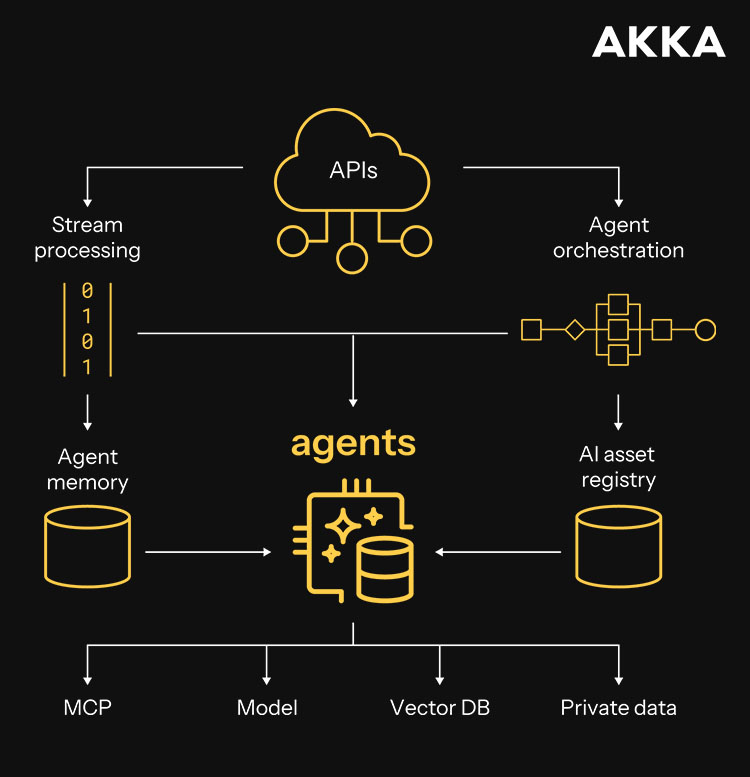
Akka Agentic Platform – Architecting for Real-Time, Autonomous Systems - Sponsored by Akka

Modern architectures weren’t built for agentic AI. As workloads become more autonomous, stateful, and adaptive, traditional microservices and pipelines struggle to orchestrate reasoning, memory, and real-time response. The new Akka Agentic Platform unifies Orchestration, Agents, Memory, and Streaming in one event-driven fabric—helping architects design systems that act, learn, and scale under uncertainty. Discover how Akka enables smarter AI with less compute, resilient event flows, and low-latency state management for next-generation applications.

Learn more about the Akka Agentic Platform.

Sponsored by Akka

About InfoQ

Senior software developers rely on the InfoQ community to keep ahead of the adoption curve. One of the main reasons software architects and engineers tell us they keep coming back to InfoQ is because they trust the information provided and selected by their peers.

We’ve been helping software development teams adopt new technologies and practices for over 19 years through InfoQ articles, news items, podcasts, tech talks, trends reports, and QCon software development conferences.

We hope you find this newsletter useful. If not, you can unsubscribe using the link below.

Unsubscribe

Forwarded email? Subscribe and get your own copy.

Subscribe

Follow InfoQ on:

You have received this email because you subscribed to "The Architects' Newsletter". To stop receiving the Architects' Newsletter, please click the following link: Unsubscribe

- - -

C4Media Inc. (InfoQ.com), 705-2267 Lake Shore Blvd. West,
Toronto, Ontario, Canada, M8V 3X2